Indian Economy Timeline: Five-Year Plans to GST
The key turning points in India's economy since 1947, covering planning, bank nationalisation, the Green Revolution, the 1991 reforms and GST, with the institutions behind them.
By DesiQuiz Editorial Team· Updated 9 Oct 2026· 4 min readIndian Economy quiz
Economy questions in general-knowledge quizzes rarely need heavy theory. They ask what happened when, who did it, and which institution is responsible. This guide follows the economy through five phases.
Phase 1: Planned development (1947-1965)
- Mixed economy. Independent India chose a mixed model, with both public and private sectors. The Industrial Policy Resolutions of 1948 and 1956 set the roles of each.
- Planning Commission was set up in March 1950, with the Prime Minister as chairman. The first Five-Year Plan (1951-56) emphasised agriculture and irrigation (the Harrod-Domar model). The second plan (1956-61), based on the Mahalanobis model, emphasised heavy industry and led to steel plants at Bhilai, Rourkela and Durgapur.
- The Planning Commission was replaced by NITI Aayog on 1 January 2015. The twelfth and last plan ended in 2017.
- Reserve Bank of India (RBI) began operating on 1 April 1935 and was nationalised in 1949. It is headquartered in Mumbai and issues all currency notes except the one-rupee note, which is issued by the Government of India.
Phase 2: Control and self-reliance (1965-1991)
- Green Revolution (from the mid-1960s): high-yielding wheat and rice varieties, fertilisers and irrigation transformed food production in Punjab, Haryana and western Uttar Pradesh. M. S. Swaminathan is known as its Indian architect and Norman Borlaug as its global figure.
- White Revolution / Operation Flood (from 1970): led by Verghese Kurien, built on the Amul cooperative model, and made India one of the world's largest milk producers.
- Bank nationalisation: 14 major banks in 1969, and six more in 1980.
- Heavy licensing and import controls (the "licence raj") restricted private enterprise, and growth in these decades was low, often called the "Hindu rate of growth".
Phase 3: The 1991 reforms
- The crisis. By mid-1991, foreign-exchange reserves had fallen to a level that covered only a few weeks of imports. India pledged gold to raise funds and devalued the rupee.
- The response. Prime Minister P. V. Narasimha Rao and Finance Minister Manmohan Singh announced the New Industrial Policy (24 July 1991) and wider reforms, summed up as LPG: Liberalisation, Privatisation, Globalisation.
- What changed. Most industrial licensing ended, import tariffs were reduced, foreign investment was welcomed and the public sector's monopoly in many areas ended.
- After 1991: SEBI received statutory powers (1992), India joined the WTO in 1995 (it was a founding member of its predecessor, GATT), and the services and IT sectors grew fast.
Phase 4: Rules and institutions (2000-2015)
- FRBM Act, 2003: set targets to reduce the fiscal deficit.
- MGNREGA (2005): guarantees 100 days of wage employment a year to rural households.
- Right to Information Act (2005) and the Right to Education Act (2009).
- Aadhaar (2009 onwards) became the basis of direct benefit transfers.
- NITI Aayog replaced the Planning Commission in 2015.
Phase 5: Digital and tax reform (2016 onwards)
- Demonetisation (8 November 2016): Rs 500 and Rs 1,000 notes were withdrawn from circulation.
- UPI (Unified Payments Interface) was launched in 2016 by the National Payments Corporation of India (NPCI) and became the world's largest real-time retail payments system by volume.
- Insolvency and Bankruptcy Code (2016): a time-bound process for resolving insolvency.
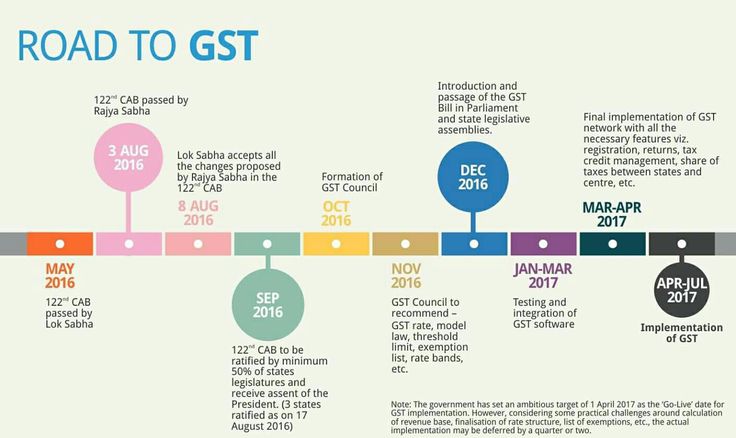
- GST: Goods and Services Tax, introduced on 1 July 2017 through the 101st Constitutional Amendment (2016). It replaced many central and state indirect taxes and is overseen by the GST Council.
Basics that appear in quizzes
| Concept | Remember |
|---|---|
| Financial year | 1 April to 31 March |
| Largest sector by share of GDP | Services (tertiary) |
| Largest employer | Agriculture |
| Central bank | Reserve Bank of India |
| Budget presented by | The Union Finance Minister, usually on 1 February |
| First Governor of RBI | Sir Osborne Smith; the first Indian was C. D. Deshmukh |
Common traps
- Planning Commission (1950-2014) and NITI Aayog (from 2015) are different bodies; the first set Five-Year Plans.
- The 1991 reforms were driven by a balance-of-payments crisis, not by the WTO.
- GST was introduced in 2017, demonetisation in 2016.
- The one-rupee note is signed by the Finance Secretary, not issued by the RBI.