Indian Parliament: How a Bill Becomes Law
How the President, Lok Sabha and Rajya Sabha fit together, the numbers behind each house, the types of bills, and the steps a bill takes before it becomes an Act.
By DesiQuiz Editorial Team· Updated 9 Oct 2026· 4 min readIndian Polity and Constitution quiz
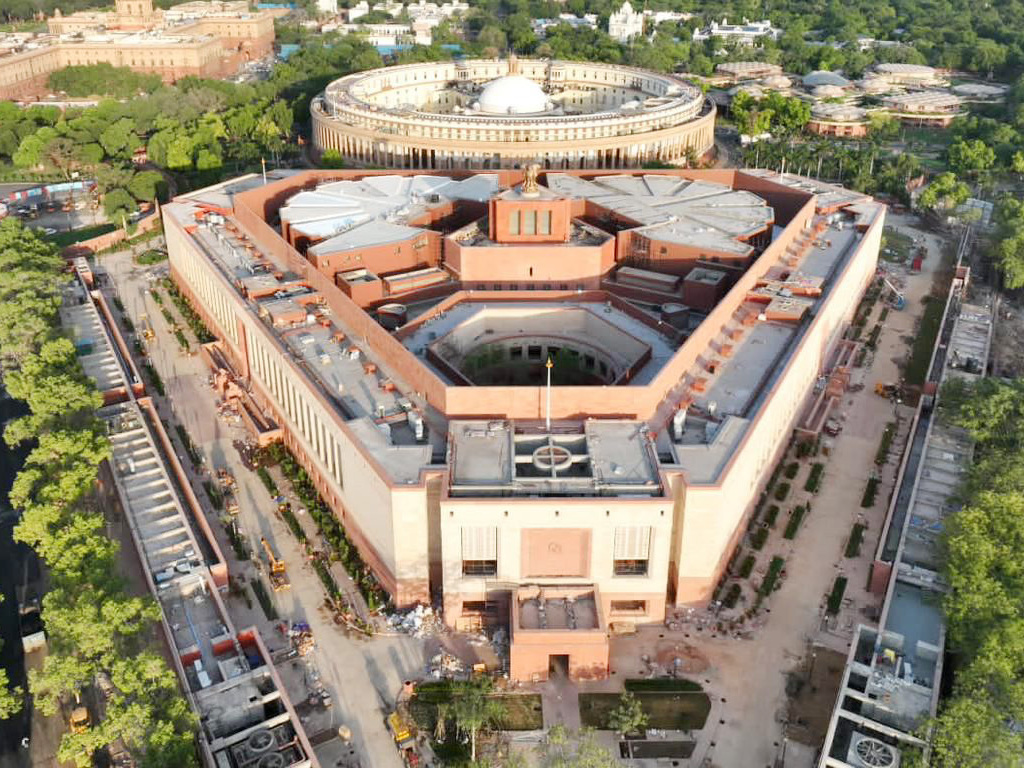
Parliament is India's national legislature. It has three parts: the President, the Lok Sabha (House of the People) and the Rajya Sabha (Council of States). The President is part of Parliament because no bill becomes law without the President's assent.
The two houses side by side
| Lok Sabha | Rajya Sabha | |
|---|---|---|
| Role | Lower house, directly elected | Upper house, represents the states |
| Maximum strength | 550 (530 from states, 20 from union territories) | 250 (238 elected + 12 nominated) |
| Present strength | 543 elected | 245 (233 elected + 12 nominated) |
| Term | 5 years unless dissolved earlier | Permanent house, cannot be dissolved; one third of members retire every 2 years |
| Member's term | 5 years | 6 years |
| Minimum age | 25 | 30 |
| Presiding officer | Speaker | Chairman (the Vice-President of India, ex officio) |
| Elected by | Adult voters (18 and above) | Elected members of state legislative assemblies, by proportional representation using the single transferable vote |
The 12 nominated members of the Rajya Sabha are persons with special knowledge or practical experience in literature, science, art and social service.
Who presides, who leads
- The Speaker is elected by the Lok Sabha from among its members. The first Speaker was G. V. Mavalankar.
- The Prime Minister leads the Council of Ministers and is collectively responsible to the Lok Sabha.
- The Leader of the Opposition is recognised if a party holds at least one tenth of the seats.
- The Deputy Chairman and the Chairman run the Rajya Sabha.
Sessions
Parliament usually meets in three sessions a year: Budget (February-May), Monsoon (July-August) and Winter (November-December). The gap between two sessions cannot exceed six months. The President summons, prorogues and may address the houses; only the President can dissolve the Lok Sabha.
Types of bills
- Ordinary bills: can start in either house. They need a simple majority in both houses.
- Money bills (Article 110): deal only with taxation, borrowing and spending of public money. They can be introduced only in the Lok Sabha on the President's recommendation. The Rajya Sabha can only make recommendations, and must return the bill within 14 days; the Lok Sabha may accept or reject them. The Speaker certifies whether a bill is a money bill.
- Financial bills: involve financial matters but are not purely money bills.
- Constitutional amendment bills (Article 368): need a special majority. Some amendments also need ratification by at least half of the state legislatures.
From bill to Act: the steps
- Introduction (first reading). A member introduces the bill, and its title and purpose are read.
- Second reading. The general principles are debated. The bill may be sent to a standing or select committee for detailed scrutiny, then debated clause by clause.
- Third reading. The final vote on the bill as a whole.
- Second house. The same process is repeated in the other house.
- Disagreement. If the two houses disagree on an ordinary bill, the President may call a joint sitting (Article 108), presided over by the Speaker. The decision is by majority of the members present and voting. Joint sittings have been held only a handful of times, including for the Dowry Prohibition Bill (1961) and the Prevention of Terrorism Bill (2002).
- Presidential assent. The President can give assent, withhold it, or return a non-money bill once for reconsideration. If Parliament passes it again, the President must assent.
Other powers and devices
- Question Hour: the first hour of a sitting, where members question ministers.
- Zero Hour: an Indian innovation; a member raises an urgent matter without prior notice.
- Motions: adjournment, no-confidence (only against the Council of Ministers, in the Lok Sabha), and cut motions on the budget.
- Ordinances (Article 123): when Parliament is not in session, the President can issue an ordinance with the force of law. It must be approved by Parliament within six weeks of Parliament reassembling.
- Anti-defection law: the Tenth Schedule, added by the 52nd Amendment (1985), disqualifies members who defect from their party; the 91st Amendment (2003) tightened it.
Common traps
- The Rajya Sabha cannot be dissolved, but the Lok Sabha can.
- The Vice-President, not the Deputy Chairman, is the Chairman of the Rajya Sabha.
- A no-confidence motion is moved only in the Lok Sabha.
- The Lok Sabha's term can be extended beyond five years only during a national Emergency, one year at a time.
- Money bills never start in the Rajya Sabha.