National Symbols of India: Flag, Anthem and More
The flag, anthem, song, emblem, animal, bird and other national symbols of India, with who made them, when they were adopted and the details that quizzes ask about.
By DesiQuiz Editorial Team· Updated 9 Oct 2026· 5 min readIndian History & Culture quiz
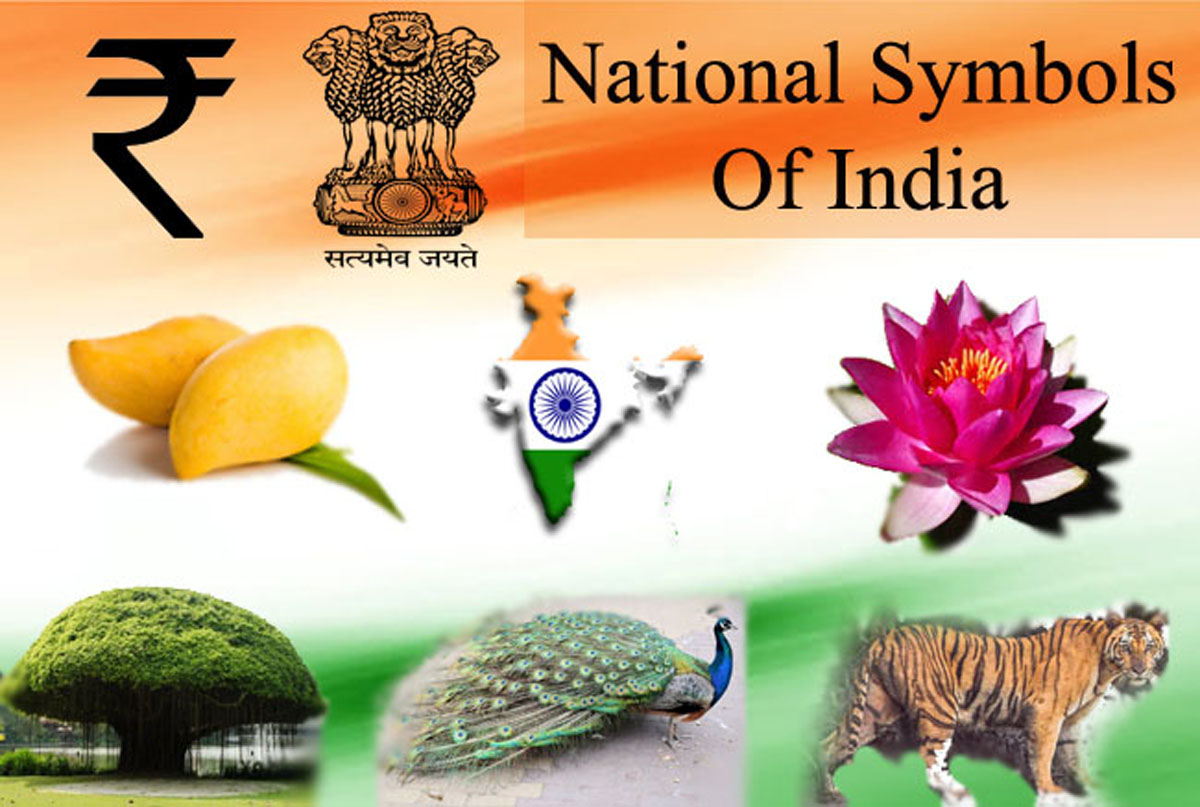
National symbols are short, factual and examined often. Each one has a creator, a date of adoption and a few defining details. Learn those three things for each symbol.
The flag
- The Tricolour has three equal horizontal bands: saffron at the top, white in the middle and green at the bottom, with a navy-blue Ashoka Chakra of 24 spokes at the centre. The ratio of length to width is 3:2.
- It was adopted by the Constituent Assembly on 22 July 1947, a few weeks before independence. Pingali Venkayya is associated with the original design of the national flag.
- The Chakra is taken from the lion capital of Ashoka at Sarnath.
- The Flag Code of India governs its use. Since a Supreme Court decision in 2004, citizens may fly the flag on any day, within the code.
- The flag is made of khadi, and the Bureau of Indian Standards sets the specifications. The Khadi Development and Village Industries Commission holds the licence for its manufacture, and Hubballi in Karnataka is home to the licensed unit for the larger flags.
How the flag came to be
- 1906: an early tricolour is hoisted in Calcutta (green, yellow and red).
- 1907: Madame Bhikaiji Cama unfurls a flag at the International Socialist Congress in Stuttgart, Germany.
- 1921: Pingali Venkayya presents a flag design to Gandhi, who suggests adding a spinning wheel (charkha) to represent self-reliance.
- 1931: Congress adopts a tricolour of saffron, white and green with a charkha in the centre.
- 1947: the charkha is replaced by the Ashoka Chakra, and the flag becomes the national flag of the Dominion of India and, from 1950, of the Republic.
A common reading, given by S. Radhakrishnan, is that saffron stands for courage and sacrifice, white for peace and truth, and green for faith and fertility. The Chakra represents the wheel of law (dharma).
The anthem
- Jana Gana Mana was composed by Rabindranath Tagore in Bengali, and first sung at the Calcutta session of the Indian National Congress in December 1911.
- Adopted as the national anthem on 24 January 1950. The full version takes about 52 seconds to play.
The national song
- Vande Mataram was written by Bankim Chandra Chattopadhyay and appeared in his novel Anandamath (1882). It was given an honour equal to the anthem on 24 January 1950.
The emblem and motto
- The State Emblem is an adaptation of the Lion Capital of Ashoka at Sarnath. It was adopted on 26 January 1950, the day India became a republic. Three of the four lions are visible, with the wheel (Dharma Chakra) in the centre of the base, a bull on the right and a horse on the left.
- The motto Satyameva Jayate ("Truth alone triumphs") is from the Mundaka Upanishad, written in Devanagari script below the emblem.
Other national symbols
| Symbol | Choice |
|---|---|
| National animal | Bengal tiger (adopted in 1973, the year Project Tiger was launched) |
| National bird | Indian peafowl (peacock) |
| National flower | Lotus |
| National tree | Banyan |
| National fruit | Mango |
| National river | Ganga (declared in 2008) |
| National aquatic animal | Ganges river dolphin |
| National heritage animal | Elephant |
| National calendar | Saka calendar (adopted 22 March 1957) |
| Currency symbol | ₹, designed by D. Udaya Kumar and adopted in 2010 |
Days and dates linked to the symbols
| Day | Date | What it marks |
|---|---|---|
| Republic Day | 26 January | The Constitution came into force in 1950; the state emblem was adopted the same day |
| Independence Day | 15 August | The flag is hoisted at the Red Fort by the Prime Minister |
| Constitution Day | 26 November | The Constituent Assembly adopted the Constitution in 1949 |
| Anthem and song adoption | 24 January 1950 | Date on which the Constituent Assembly accepted both |
Flag rules differ between the two national days. On Independence Day the flag is hoisted at the top of the pole and then unfurled; on Republic Day it is unfurled while already at the top, which is why the ceremonies are described differently.
State and regional symbols
Every state has its own state animal, bird, tree and flower. For example, the Nilgiri tahr is the state animal of Tamil Nadu, and the rhododendron is the state tree of Uttarakhand. The national symbols are the ones the Union of India has formally adopted, so the state ones only occasionally appear in quizzes.
What India does not have
- India has no official national sport. Hockey is widely believed to be the national sport, but the Government has clarified that no sport has been formally declared as such.
- The Constitution names Hindi in Devanagari script as the official language of the Union under Article 343, but India has no "national language" in the constitutional sense.
Common traps
- Tagore wrote the national anthem; Bankim Chandra wrote the national song.
- The Ashoka Chakra has 24 spokes; the emblem shows three lions.
- The national animal changed from the lion to the tiger in 1973.
- Satyameva Jayate comes from the Mundaka Upanishad, not from the Rigveda.
- The national flag was adopted in 1947, but the anthem, song and emblem in 1950.