ISRO and the Indian Space Programme: Key Facts
From Vikram Sarabhai and Aryabhata to Mangalyaan and Chandrayaan-3, the missions, rockets, launch sites and firsts that make up India's space story.
By DesiQuiz Editorial Team· Updated 9 Oct 2026· 4 min readScience and Technology quiz
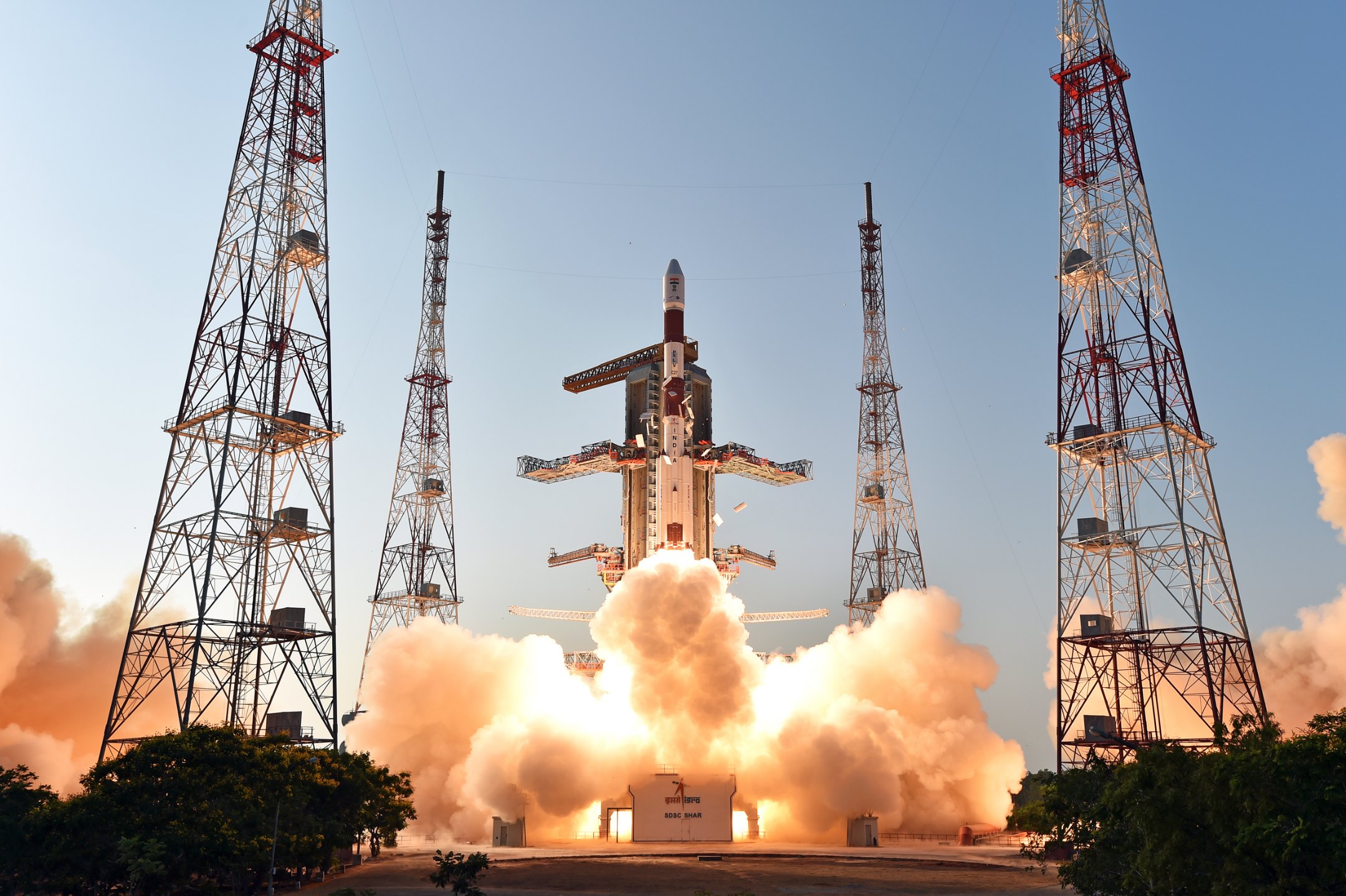
India's space programme is one of the most frequent topics in science and current-affairs quizzes. It is easiest to learn in three layers: the people and institutions, the launch vehicles, and the missions in order.
Institutions and people
- INCOSPAR (Indian National Committee for Space Research) was set up in 1962; ISRO (Indian Space Research Organisation) was formed on 15 August 1969. It is headquartered in Bengaluru and is under the Department of Space.
- Vikram Sarabhai is regarded as the father of the Indian space programme. His early work led to the Thumba Equatorial Rocket Launching Station in Kerala, from which the first sounding rocket was launched in 1963.
- Satish Dhawan led ISRO after Sarabhai; India's main launch site at Sriharikota (Andhra Pradesh) is named the Satish Dhawan Space Centre.
- A. P. J. Abdul Kalam led the project that produced SLV-3, India's first satellite launch vehicle.
- Rakesh Sharma became the first Indian citizen in space in 1984, aboard the Soviet Soyuz T-11. Kalpana Chawla and Sunita Williams are Indian-origin astronauts who flew with NASA.
- NewSpace India Limited (NSIL) is ISRO's commercial arm; IN-SPACe was created in 2020 to open the sector to private companies.
Launch vehicles
| Vehicle | Purpose |
|---|---|
| SLV-3 | First Indian launch vehicle; placed Rohini in orbit in 1980 |
| ASLV | Augmented version for small satellites |
| PSLV | The "workhorse" for polar and sun-synchronous orbits; its first successful flight was in 1994 |
| GSLV | For geosynchronous transfer orbit; uses an indigenous cryogenic stage |
| LVM3 (formerly GSLV Mk III) | Heaviest Indian launcher; used for Chandrayaan-2 and Chandrayaan-3 |
Missions in order
- Aryabhata (1975): India's first satellite, launched by the Soviet Union.
- Bhaskara (1979): an early Earth-observation satellite.
- Rohini (1980): the first satellite launched on an Indian rocket (SLV-3).
- INSAT series (from 1982): a large communication, television and weather network. IRS (from 1988) is the Indian Remote Sensing series.
- Chandrayaan-1 (2008): India's first lunar mission. Its Moon Impact Probe struck the lunar surface, and data from instruments on the mission contributed to the finding of water molecules on the Moon.
- Mars Orbiter Mission, Mangalyaan (launched November 2013): entered Mars orbit on 24 September 2014 at its first attempt. India became the first Asian country to reach Mars orbit and the first in the world to do so on its first try.
- PSLV-C37 (February 2017): launched 104 satellites in a single mission.
- Chandrayaan-2 (2019): orbiter and lander. The orbiter continues to work, but the Vikram lander lost contact during its landing attempt.
- Chandrayaan-3 (launched 14 July 2023): its lander touched down near the Moon's south polar region on 23 August 2023. India became the fourth country to soft-land on the Moon, after the USSR, the USA and China, and the first to land near the south pole. The lander is called Vikram and the rover Pragyan. 23 August is observed as National Space Day.
- Aditya-L1 (launched 2 September 2023): India's first solar observatory, positioned near the Sun-Earth Lagrange Point 1.
- Gaganyaan: India's crewed spaceflight programme, with an uncrewed test flight planned before astronauts fly.
Navigation, communication and Earth observation
- NavIC (Navigation with Indian Constellation) is India's regional navigation system, covering India and the region up to about 1,500 km around it.
- Cartosat satellites provide high-resolution mapping; Oceansat and Resourcesat support fisheries, agriculture and resource management.
- GSAT satellites carry communication payloads for television, broadband and defence communications.
Beyond ISRO
- DRDO develops missiles such as Agni, Prithvi, Akash and BrahMos (the last is a joint India-Russia venture). The "Missile Man" title belongs to Dr Kalam.
- Department of Atomic Energy runs India's nuclear programme, led in its early years by Homi J. Bhabha.
Common traps
- Aryabhata was launched by a Soviet rocket; Rohini was the first on an Indian rocket.
- Mangalyaan reached Mars orbit in 2014, but was launched in 2013.
- Chandrayaan-3 landed in 2023; Chandrayaan-2's lander did not land successfully.
- Sriharikota is in Andhra Pradesh; Thumba, the earlier site, is in Kerala.
- ISRO's headquarters are in Bengaluru, not Thiruvananthapuram (where the Vikram Sarabhai Space Centre is).